Ciabatta Bread
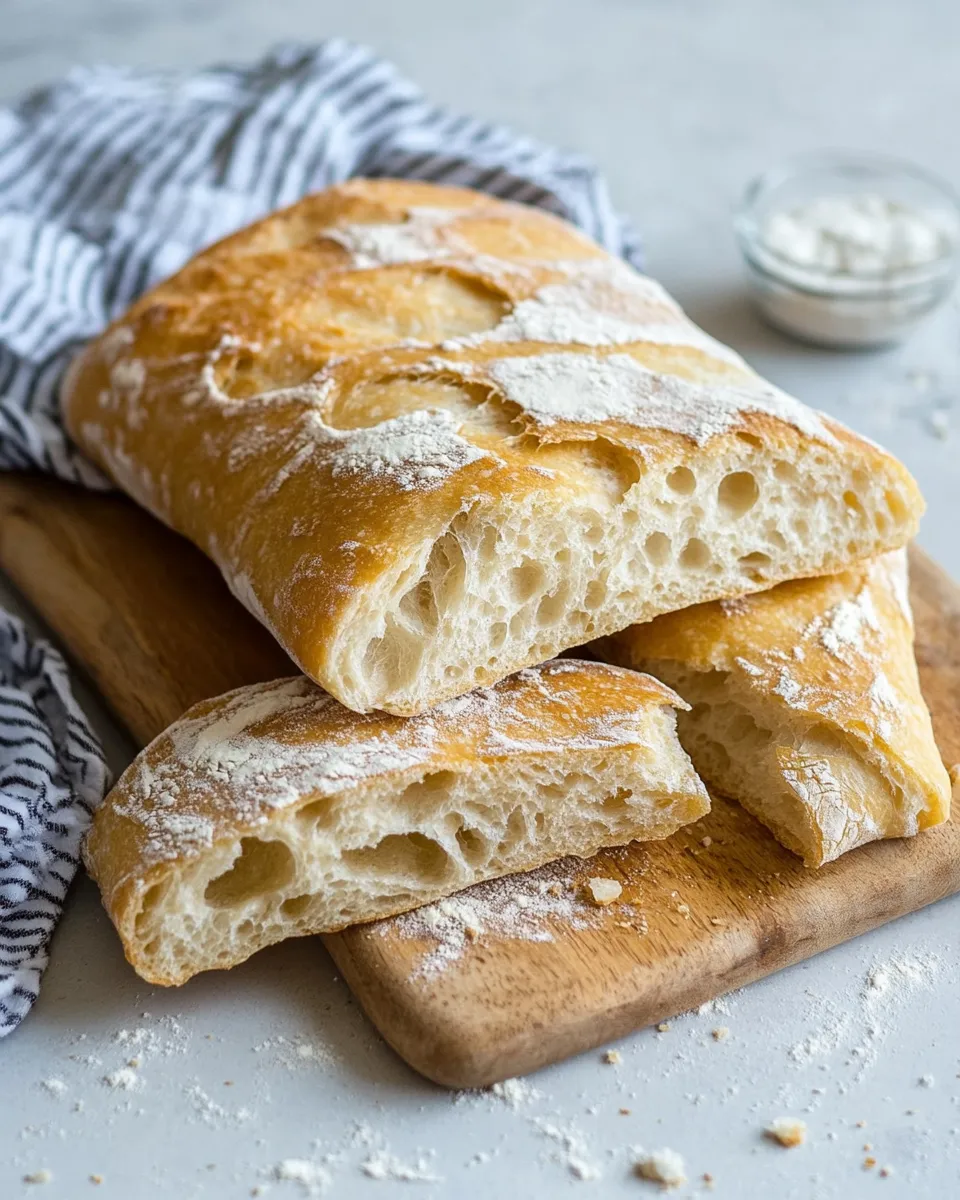
The aroma of freshly baked bread wafting through your kitchen is a feeling like no other. Ciabatta bread, with its rustic appearance and chewy texture, is one of those breads that can elevate any meal. Whether you’re using it for sandwiches, serving it alongside a hearty soup, or simply enjoying it with a drizzle of olive oil, ciabatta is a versatile choice that’s sure to impress. With just a handful of ingredients and a bit of patience, you can create this artisanal loaf right in your own home. Let’s dive into the world of ciabatta bread and discover how to make it perfect every single time.
Why You’ll Love This Recipe
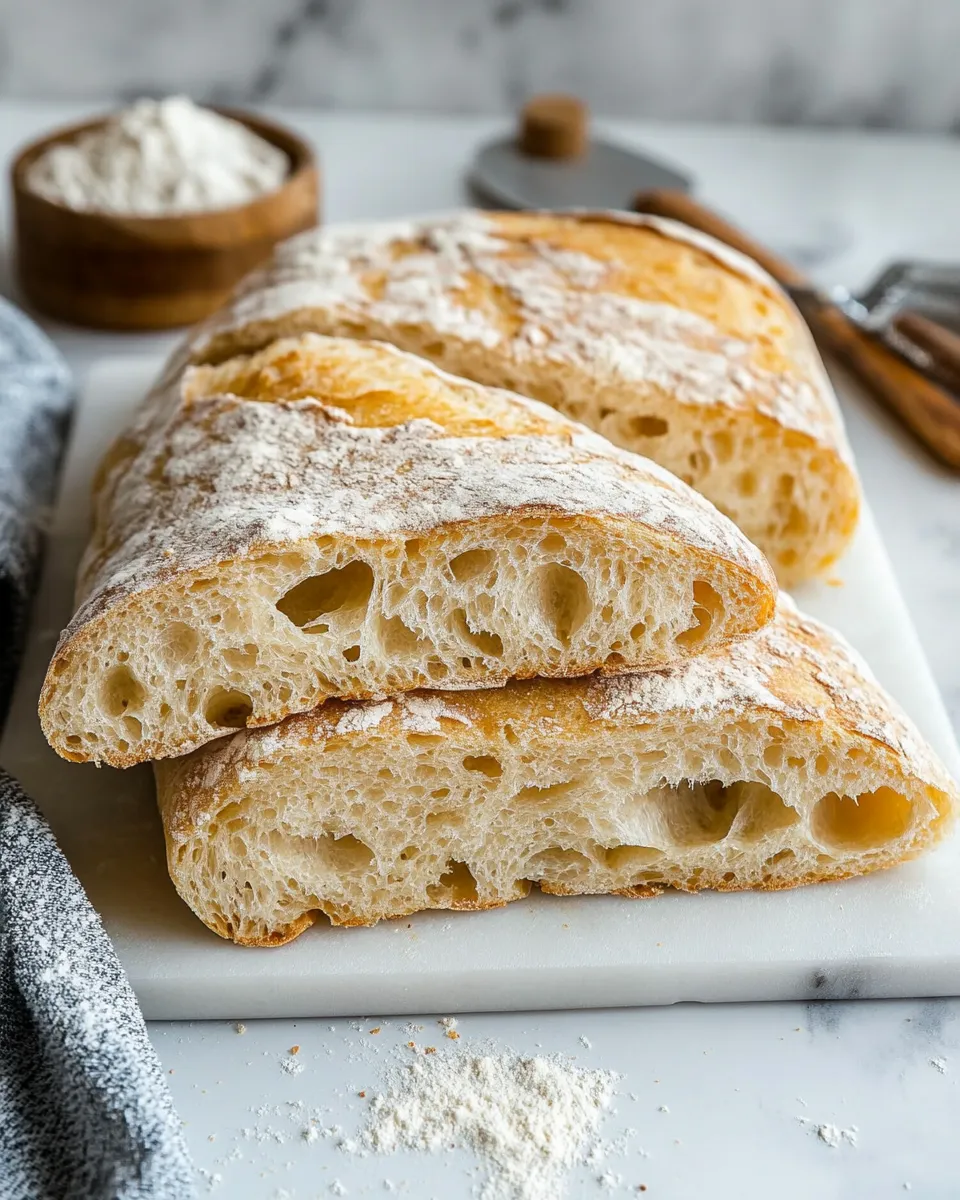
Ciabatta bread is not only delicious but also a fun project for any home baker. The process of making ciabatta allows you to appreciate the transformation of simple ingredients into a crusty, airy loaf. You’ll love:
- The chewy, open crumb structure that is perfect for soaking up sauces.
- The crispy crust that adds a delightful crunch to every bite.
- The simplicity of the ingredients, requiring just yeast, water, flour, and salt.
- The flexibility of using ciabatta for various dishes, from bruschetta to panini.
- The satisfaction of creating a bakery-quality bread from scratch.
What Goes In
To make your own ciabatta bread, you’ll need the following ingredients:
- 1 tablespoons active dry yeast, about half a packet
- 1 cup warm water, about 90°F
- 2-3 cups bread flour
- 1 teaspoon salt
These ingredients come together to create a bread that is both simple and sophisticated in flavor.
Prep & Cook Tools
Before you start baking, gather the necessary tools:
- Mixing bowl: To combine your ingredients.
- Measuring cups and spoons: For precise measurements.
- Wooden spoon or spatula: For mixing the dough.
- Dough scraper: To handle the sticky dough easily.
- Kitchen towel: To cover the dough while it rises.
- Baking sheet or stone: For baking the bread to perfection.
- Cooling rack: To cool the bread after baking.
How to Prepare Ciabatta Bread
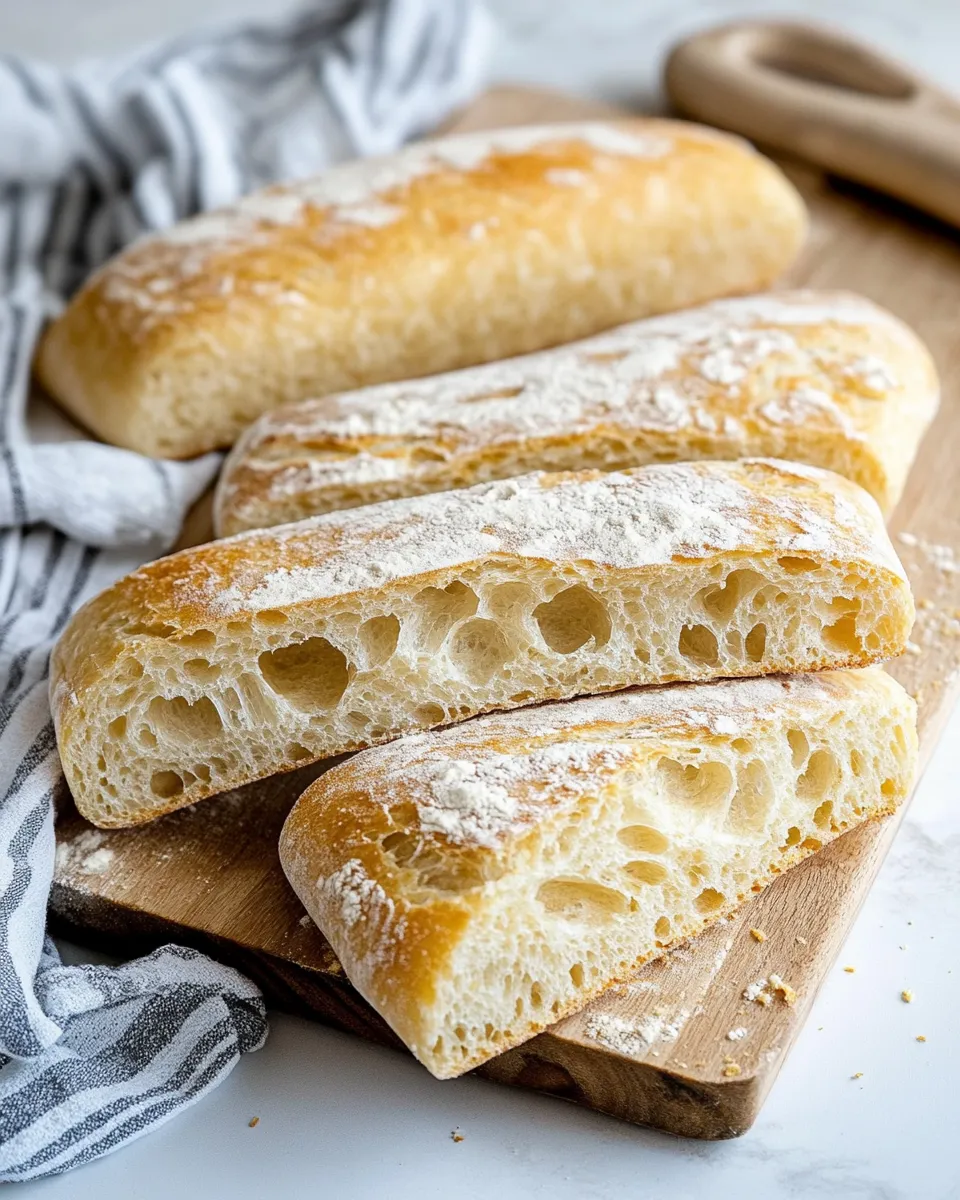
Making ciabatta bread is a rewarding experience. Follow these step-by-step instructions to create your own loaf:
Step 1: Activate the Yeast
In a small bowl, combine the active dry yeast with warm water. Allow it to sit for about 5-10 minutes until it becomes frothy. This step is crucial as it ensures the yeast is alive and ready to work its magic.
Step 2: Mix the Ingredients
In a large mixing bowl, combine 2 cups of bread flour and salt. Create a well in the center and pour in the activated yeast mixture. Using a wooden spoon or spatula, mix until a shaggy dough forms. If the dough is too sticky, gradually add more flour, a tablespoon at a time, until you achieve a dough that holds together but remains slightly tacky.
Step 3: Knead the Dough
Transfer the dough onto a floured surface. With floured hands, gently stretch and fold the dough over itself for about 5-7 minutes. You’re not looking for a traditional knead here; rather, you want to develop the gluten to create a nice structure.
Step 4: First Rise
Place the dough in a lightly greased bowl, cover it with a kitchen towel, and let it rise in a warm spot for about 1-2 hours, or until it has doubled in size.
Step 5: Shape the Ciabatta
Once the dough has risen, gently turn it out onto a floured surface. With floured hands, divide the dough into two equal portions. Shape each piece into a rectangle, being careful not to deflate the dough too much. Transfer the shaped loaves onto a baking sheet lined with parchment paper.
Step 6: Second Rise
Cover the loaves with a kitchen towel and allow them to rise again for about 30-45 minutes. This second rise contributes to the airy texture of ciabatta.
Step 7: Preheat the Oven
While the dough is rising, preheat your oven to 475°F (245°C). If you have a baking stone, place it in the oven to heat up.
Step 8: Bake the Bread
Once the loaves have risen, use a sharp knife to make a few slashes on top of each loaf. This allows steam to escape while baking, helping create that beautiful crust. Bake for 20-25 minutes, or until the bread is golden brown and sounds hollow when tapped on the bottom.
Step 9: Cool and Enjoy
Remove the ciabatta from the oven and transfer it to a cooling rack. Allow it to cool for at least 30 minutes before slicing. This waiting period helps set the crumb structure.
If You’re Out Of…
Cooking can be an adventure, and sometimes you may find yourself without a key ingredient. Here are some alternatives:
- Bread flour: You can use all-purpose flour, though the texture may be slightly less chewy.
- Active dry yeast: Instant yeast can be used interchangeably without any adjustments.
- Warm water: If you don’t have a thermometer, test with your wrist; it should feel warm, not hot.
- Salt: Sea salt or kosher salt can be used in place of table salt.
Frequent Missteps to Avoid
Even the best bakers can make mistakes. Here are some common missteps when making ciabatta bread:
- Not activating the yeast properly: Always check that your yeast is fresh and bubbly before proceeding.
- Using too much flour: This can lead to dense bread. Aim for a sticky dough that’s manageable.
- Skipping the second rise: This step is vital for developing the airy structure characteristic of ciabatta.
- Not preheating the oven: A hot oven is essential for achieving a crispy crust.
Storing Tips & Timelines
To keep your ciabatta bread fresh and delicious, consider the following storage tips:
- Room temperature: Store the bread wrapped in a kitchen towel or in a paper bag for up to 2 days.
- Freezing: Wrap the cooled bread tightly in plastic wrap and then in aluminum foil. It can be frozen for up to 3 months.
- Reheating: To refresh frozen ciabatta, bake it directly from the freezer at 375°F (190°C) for about 10-15 minutes.
Questions People Ask
Can I make ciabatta bread without a stand mixer?
Absolutely! This recipe is perfect for hand mixing. Just use a wooden spoon and your hands to knead and shape the dough.
What makes ciabatta different from other breads?
Ciabatta is known for its unique shape and open crumb structure, which is achieved through a high hydration dough and minimal kneading.
How do I know when my ciabatta is done baking?
Ciabatta is done when it is golden brown and sounds hollow when tapped on the bottom. A temperature check should read about 200°F (93°C) internally.
Can I add herbs or olives to my ciabatta dough?
Yes! Feel free to fold in fresh herbs, olives, or other ingredients during the shaping step for added flavor.
In Closing
Making ciabatta bread is not just about the final product; it’s about the journey of baking, the aromas that fill your home, and the joy of sharing a homemade loaf with loved ones. Whether you enjoy it fresh out of the oven or use it in a delicious sandwich, each bite will reflect the care and love you put into baking. So roll up your sleeves, gather your ingredients, and embark on this delightful baking adventure. Your homemade ciabatta awaits!
Ciabatta Bread
Ingredients
Equipment
Method
- Step 1: Activate the Yeast - In a small bowl, combine the active dry yeast with warm water. Allow it to sit for about 5-10 minutes until it becomes frothy.
- Step 2: Mix the Ingredients - In a large mixing bowl, combine 2 cups of bread flour and salt. Create a well in the center and pour in the activated yeast mixture. Mix until a shaggy dough forms.
- Step 3: Knead the Dough - Transfer the dough onto a floured surface and gently stretch and fold it for about 5-7 minutes.
- Step 4: First Rise - Place the dough in a lightly greased bowl, cover it with a kitchen towel, and let it rise for about 1-2 hours, or until doubled in size.
- Step 5: Shape the Ciabatta - Gently turn the risen dough onto a floured surface, divide it into two equal portions, and shape each into a rectangle.
- Step 6: Second Rise - Cover the loaves with a kitchen towel and allow them to rise again for about 30-45 minutes.
- Step 7: Preheat the Oven - While the dough is rising, preheat your oven to 475°F (245°C).
- Step 8: Bake the Bread - Make a few slashes on top of each loaf and bake for 20-25 minutes, or until golden brown.
- Step 9: Cool and Enjoy - Remove the ciabatta from the oven and transfer it to a cooling rack. Allow it to cool for at least 30 minutes before slicing.
Notes
- Store ciabatta wrapped in a kitchen towel for up to 2 days.
- Freeze cooled ciabatta wrapped tightly for up to 3 months.
- To refresh frozen ciabatta, bake at 375°F for 10-15 minutes.